Mess is a signal, not a strategy
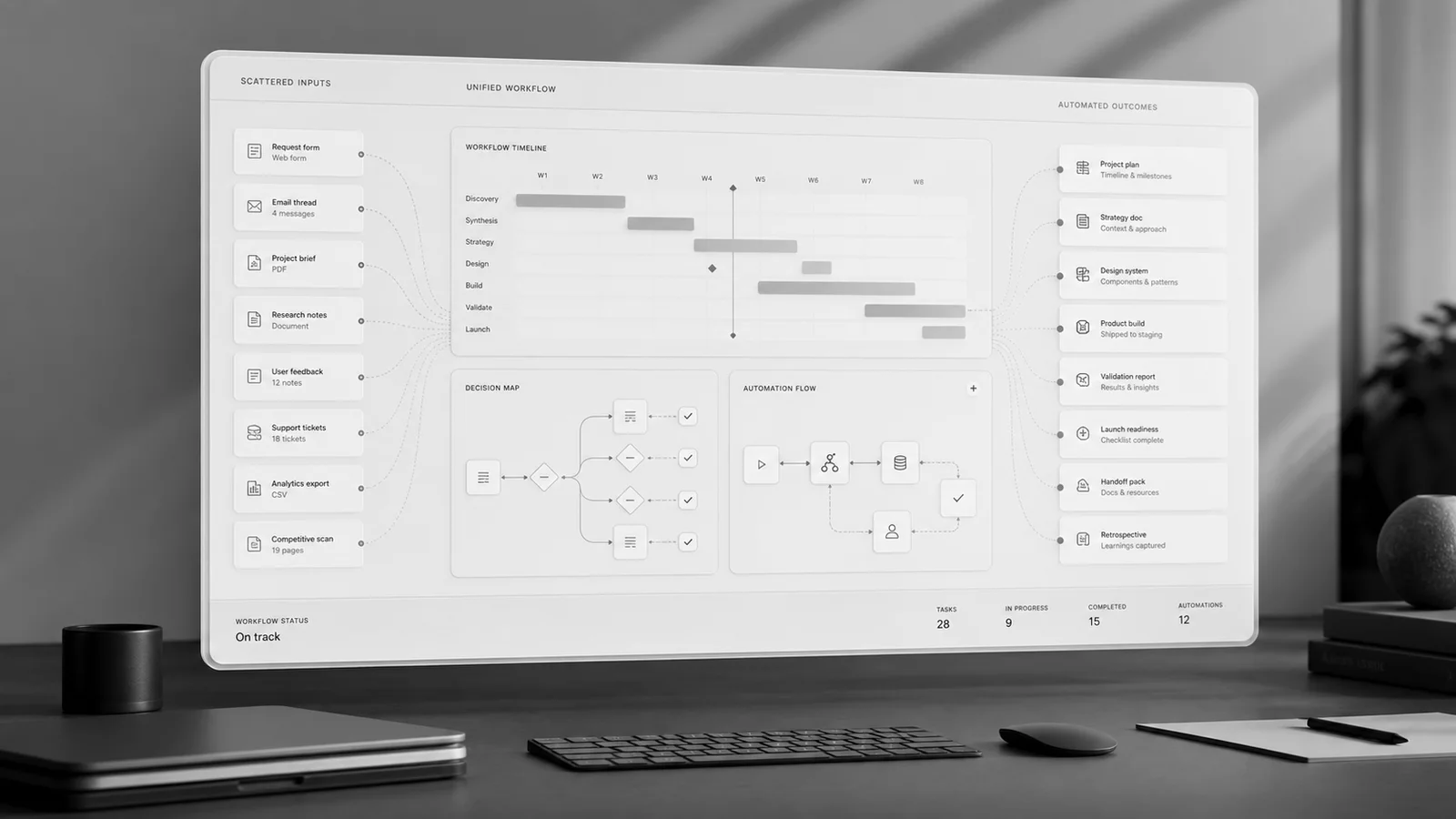
Early work rarely arrives as a clean brief. It arrives as screenshots, messages, feature wishes, half-written documents, partner conversations, and a strong feeling that something should exist. I enjoy that stage, but I do not romanticize it. Founder chaos is useful only until it reveals the real decisions. After that, the job is to create a structure that other people can understand and that I can continue executing without rebuilding the context every morning.
I usually begin by separating facts, assumptions, promises, and ideas. Facts need sources. Assumptions need tests. Promises need owners and dates. Ideas need a reason to survive. That sorting process is product work, operations work, and storytelling at the same time. It exposes contradictions early: a feature without a user, a partner claim without proof, a page with no action, or an automation that makes a broken workflow faster.
Make the next action visible
A useful system does not need to feel bureaucratic. It needs to preserve context and make the next action obvious. For a product, that may mean a small backlog tied to user outcomes. For a program, it may mean a stage map connecting outreach, submissions, judging, and follow-up. For a public portfolio, it means keeping claims, sources, images, metadata, and visible copy in one registry so they cannot quietly disagree.
This is also how I use AI. It can compress research, compare drafts, generate implementation paths, or help transform repetitive work into a pipeline. It cannot decide what should be true, what is defensible, or what deserves attention. I want AI inside a clear system with human judgment at the boundaries. Speed matters, but speed becomes leverage only when the direction is coherent.